
 Available in US
How Weather Affects Cricket Betting: The Complete Guide to Environmental Factors
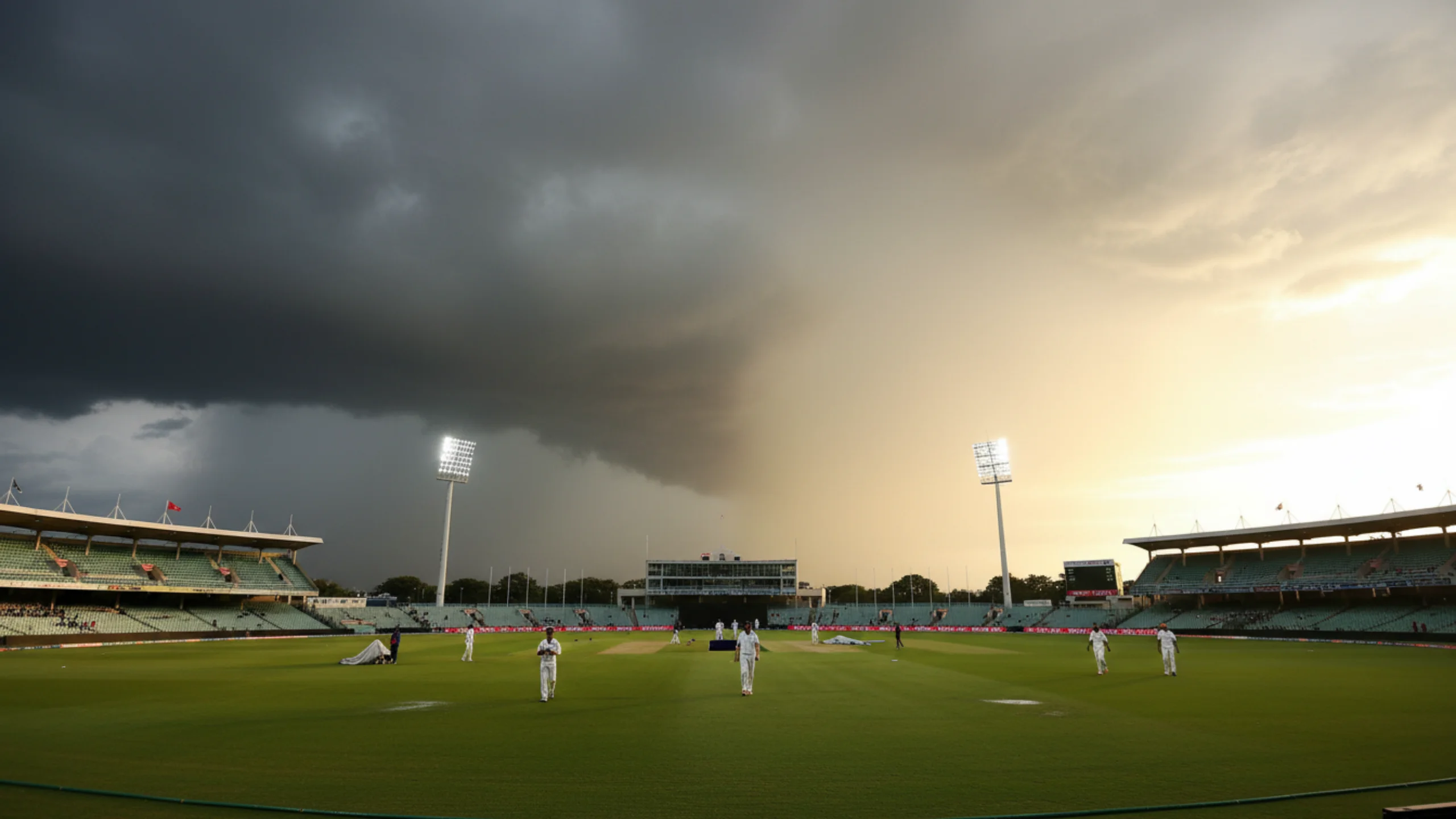
Cricket stands apart from most major sports in its vulnerability to weather. Football matches continue through rain. Tennis moves indoors when conditions deteriorate. But cricket remains stubbornly tied to atmospheric conditions in ways that create genuine betting opportunities for those willing to study the relationship between weather and match outcomes.
The casual observer knows rain stops play. The informed bettor understands that humidity affects swing, cloud cover influences bowling conditions, dew transforms evening sessions, and temperature shapes how pitches behave across multiple days. These connections between weather and cricket create edges that bookmakers cannot always price accurately, particularly when conditions change unexpectedly during matches.
This guide explores every significant way weather influences cricket betting. We will examine how rain interruptions affect match dynamics through the Duckworth-Lewis-Stern method, why humid conditions help certain bowling styles, how cloud cover correlates with batting difficulties, and what dew means for day-night matches. By the end, you will understand why serious cricket bettors check weather forecasts as routinely as they check team news.
The knowledge here applies across all formats but matters most in Test cricket where matches span multiple days and conditions evolve dramatically. Limited overs cricket compresses weather effects into shorter timeframes but amplifies their impact on outcomes when interruptions occur.
Why Weather Matters More in Cricket Than Other Sports
Cricket’s outdoor nature exposes matches to environmental conditions that most sports either avoid or ignore. The sport evolved in England where unpredictable weather became part of the game’s character rather than an obstacle to overcome. This heritage means cricket embraces weather effects that other sports would consider unacceptable interference.
The cricket ball responds to atmospheric conditions in measurable ways. Humidity affects how much the ball swings through the air. Temperature influences how the ball travels off the bat. Moisture content in the pitch determines bounce and movement off the surface. These physical relationships create predictable patterns that inform betting decisions.
Unlike football where a wet pitch merely makes footing uncertain, cricket pitches change character fundamentally based on moisture content. A damp pitch offers assistance to seam bowlers that dry conditions would deny. A pitch baked under hot sun becomes hard and bouncy in ways that suit certain bowling types over others. The playing surface itself transforms based on weather exposure.
Visibility matters in cricket more than casual observers realise. Batsmen tracking a ball travelling over eighty miles per hour need optimal sighting conditions. Overcast skies reduce contrast between ball and background. Fading evening light challenges depth perception. These visual difficulties affect batting performance in ways that manifest in scoring patterns and dismissal rates.
The duration of cricket matches extends weather exposure beyond what most sports experience. A Test match spanning five days encounters multiple weather systems. Morning conditions differ from afternoon conditions on the same day. Conditions on day one bear little resemblance to conditions on day four. This extended exposure creates complexity that rewards sustained attention to forecasts.
Bookmakers price cricket matches based on expected conditions at the time odds are set. When actual conditions diverge from expectations, opportunities emerge. A match priced assuming dry conditions suddenly facing overcast skies offers different value than originally assessed. Bettors who track weather more closely than bookmakers update their models gain genuine edge.
The betting markets most affected by weather include match winner odds, session totals, innings runs, and any market dependent on scoring rates or wicket frequency. Understanding which markets respond most sensitively to weather conditions helps focus attention where edge is most likely to exist.
Rain Interruptions and the Duckworth-Lewis-Stern Method
Rain remains cricket’s most obvious weather factor, capable of washing out entire days of Test cricket or dramatically altering limited overs matches through revised targets. The Duckworth-Lewis-Stern method governs how rain-affected limited overs matches are resolved, and understanding this system is essential for betting during weather-threatened games.
The DLS method calculates revised targets based on resources remaining when play resumes. Resources combine overs remaining and wickets in hand. A team with forty overs and ten wickets has more resources than a team with forty overs and five wickets, or a team with twenty overs and ten wickets. The method attempts to produce fair targets that account for reduced opportunity.
The mathematics underlying DLS creates situations that objectively favour one team over the other. When rain interrupts during the first innings, the team batting second receives a target adjusted for reduced overs. When rain interrupts during the chase, the chasing team’s target adjusts based on their current position and remaining resources.
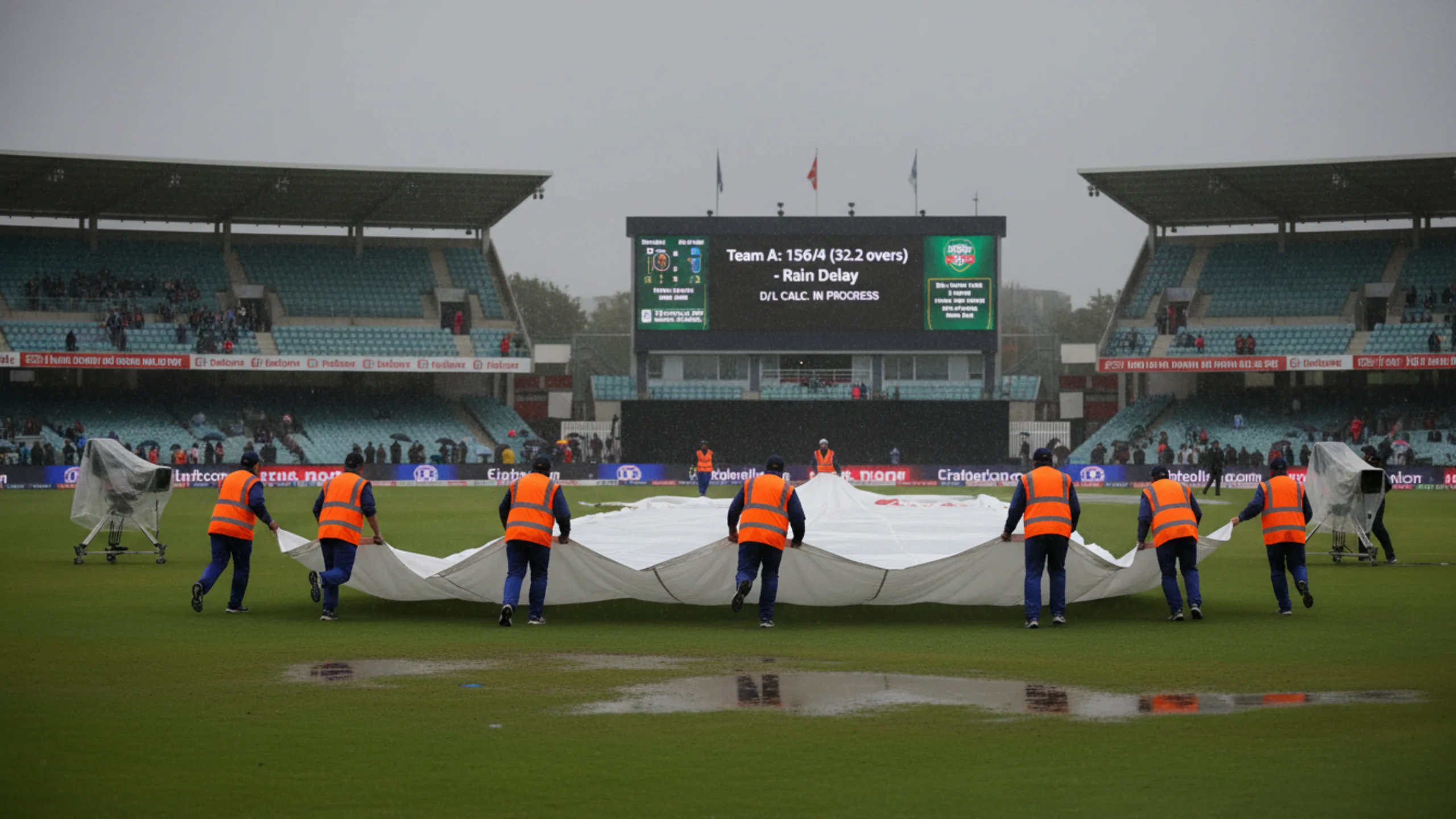
Certain match situations produce DLS targets that heavily favour one side. A team defending a modest total when rain threatens often benefits because DLS targets for shortened chases can exceed what would be required at normal scoring rates. Conversely, teams chasing large totals sometimes benefit from interruptions that reduce their target below what they were tracking toward.
Smart bettors learn to recognise these asymmetric situations before they fully develop. When rain appears likely during a limited overs match, assessing which team benefits from potential interruptions becomes crucial. The team currently disadvantaged by DLS implications might offer value if their pre-interruption odds fail to account for this factor.
Live betting during rain delays requires particular attention. Odds adjust based on revised targets and perceived difficulty, but bookmaker models sometimes lag in recognising subtle advantages created by specific DLS scenarios. The window between rain stopping and odds fully adjusting sometimes offers value for bettors who have calculated revised situations quickly.
Test cricket handles rain differently because draws remain possible outcomes. Rain washing out substantial play increases draw probability, often dramatically. Bookmakers adjust draw odds as rain falls, but the relationship between lost play and draw likelihood is not linear. Early match rain matters less than rain during crucial fourth or fifth day passages.
Monitoring weather forecasts throughout Test matches helps anticipate how rain probability affects match betting. A team holding a small lead with rain forecast for the final two days finds themselves in different strategic situations than clear weather would create. These dynamics affect optimal betting positions and create opportunities when forecasts change.
The psychological effects of rain interruptions sometimes matter as much as the mathematical adjustments. Teams building momentum see that momentum disrupted. Batsmen finding rhythm must start again after delays. Bowlers who had settled into effective spells lose their groove. These human factors compound the technical DLS effects in ways that sharp bettors consider.
Humidity and Its Effect on Swing Bowling
Humidity represents perhaps the most misunderstood weather factor in cricket betting. The relationship between atmospheric moisture and ball movement through the air creates conditions that dramatically favour swing bowlers when humidity rises above certain thresholds.
Swing bowling involves the ball moving laterally through the air before pitching. Conventional swing occurs when one side of the ball is shinier than the other, creating differential airflow that pushes the ball toward the rough side. Reverse swing occurs with older balls where the dynamics invert. Both forms of swing increase in humid conditions.

The physics involves air density and the boundary layer around the moving ball. Higher humidity actually means lower air density because water vapour is lighter than nitrogen and oxygen. However, the moisture affects the boundary layer turbulence in ways that amplify swing movement. Bowlers who master swing bowling often perform dramatically better in humid conditions.
English conditions epitomise swing-friendly environments. The combination of frequently overcast skies, high humidity, and pitches that retain moisture creates perfect conditions for bowlers like James Anderson who built entire careers around swing bowling mastery. Matches in England during humid periods regularly produce lower scoring and more frequent dismissals than equivalent matches in dry conditions.
The subcontinent offers contrasting conditions. Low humidity across much of India and Pakistan reduces swing potential significantly. Bowlers who dominate in England often struggle in these conditions because their primary weapon becomes ineffective. Conversely, spinners thrive in subcontinental conditions where lack of swing makes batting easier initially but pitch deterioration assists turn later.
Betting implications flow directly from these patterns. When humidity forecasts suggest swing-friendly conditions, bowler-dominated markets offer value if odds fail to account for the environmental advantage. Total runs unders become more attractive. Top bowler markets for skilled swing practitioners gain appeal. Match outcome odds should shift toward teams with stronger swing bowling resources.
Morning sessions typically feature higher humidity than afternoon sessions in most locations. The diurnal variation creates predictable patterns where bowling with the new ball in morning conditions offers greater advantage than bowling later in the day. Session betting strategies can exploit these patterns when line setters fail to account adequately for time-of-day humidity effects.
Monitoring humidity forecasts for specific match sessions allows precise targeting of betting opportunities. A morning forecast showing eighty percent humidity suggests very different conditions than sixty percent humidity. These differences might not change overall match odds but can create value in more granular session and innings markets.
The interaction between humidity and other conditions adds complexity. High humidity under overcast skies compounds bowling advantages. High humidity under bright sunshine feels different because visibility improves even as swing potential remains. Evaluating the complete environmental picture rather than any single factor produces more accurate assessments.
Cloud Cover and Its Correlation with Batting Difficulties
Cricket folklore insists that overcast conditions help bowlers, and statistical evidence largely supports this belief. The correlation between cloud cover and batting difficulties appears consistently across decades of match data, though the precise mechanisms remain somewhat debated among players and analysts.
The most straightforward explanation involves visibility. Batsmen tracking a red ball against grey, overcast skies face more challenging sighting conditions than tracking the same ball against clear blue backgrounds. The reduced contrast makes picking up the ball from the bowler’s hand fractionally harder, and those fractions matter when reaction times measure in milliseconds.

The second explanation involves atmospheric conditions that typically accompany cloud cover. Overcast skies frequently correlate with higher humidity, which affects swing as discussed. They also often accompany cooler temperatures that keep pitches fresher and more helpful to seam movement. Separating the direct effects of clouds from correlated atmospheric factors proves difficult.
Whatever the precise mechanism, the betting implications remain consistent. Matches played under heavy cloud cover tend toward lower scoring and more frequent wickets than matches played under clear skies. This pattern appears most strongly in Test cricket but manifests in limited overs formats as well.
The timing of cloud cover matters as much as its presence. Clouds rolling in during crucial sessions can shift match dynamics rapidly. A batting team cruising under morning sunshine might suddenly face different conditions as afternoon clouds develop. Live betting markets sometimes lag in adjusting to these visible changes, creating brief opportunities.
Weather forecasts increasingly provide hour-by-hour cloud cover predictions that allow precise planning. Knowing that clouds will likely clear by mid-afternoon suggests different session betting strategies than knowing overcast conditions will persist throughout the day. This granular forecast information creates edge when bookmakers use less detailed weather inputs.
The psychological effects of overcast conditions on batsmen deserve consideration beyond physical factors. Many batsmen report feeling less comfortable when skies are grey, regardless of actual ball behaviour. This mental component might explain why the overcast effect sometimes appears even when humidity and other factors remain constant.
Tournament and series betting can incorporate cloud cover patterns when assessing overall outcomes. An England summer featuring unusually persistent cloud cover suggests more bowler-friendly conditions across the entire period. This might influence series betting on team matchups where bowling strength varies significantly between sides.
Not all grounds respond equally to cloud cover. Grounds with particular orientations, surrounded by certain geography, or featuring specific pitch types might show stronger or weaker correlations between clouds and batting difficulties. Local knowledge about specific venue responses to weather conditions adds value that generic weather analysis misses.
The Dew Factor in Day-Night Cricket
Day-night cricket introduced complications that traditional cricket never faced. As evening progresses and temperatures drop, moisture condenses on grass and equipment. This dew accumulation affects ball behaviour, fielding conditions, and ultimately match outcomes in ways that create significant betting considerations.
The ball becomes slippery when wet with dew. Bowlers struggle to grip the ball properly, reducing control over line and length. Swing bowling becomes nearly impossible because maintaining the ball condition required for movement proves impractical with constant moisture. Spinners find grip difficult, reducing turn and control. The bowling team faces systematic disadvantage during heavy dew periods.
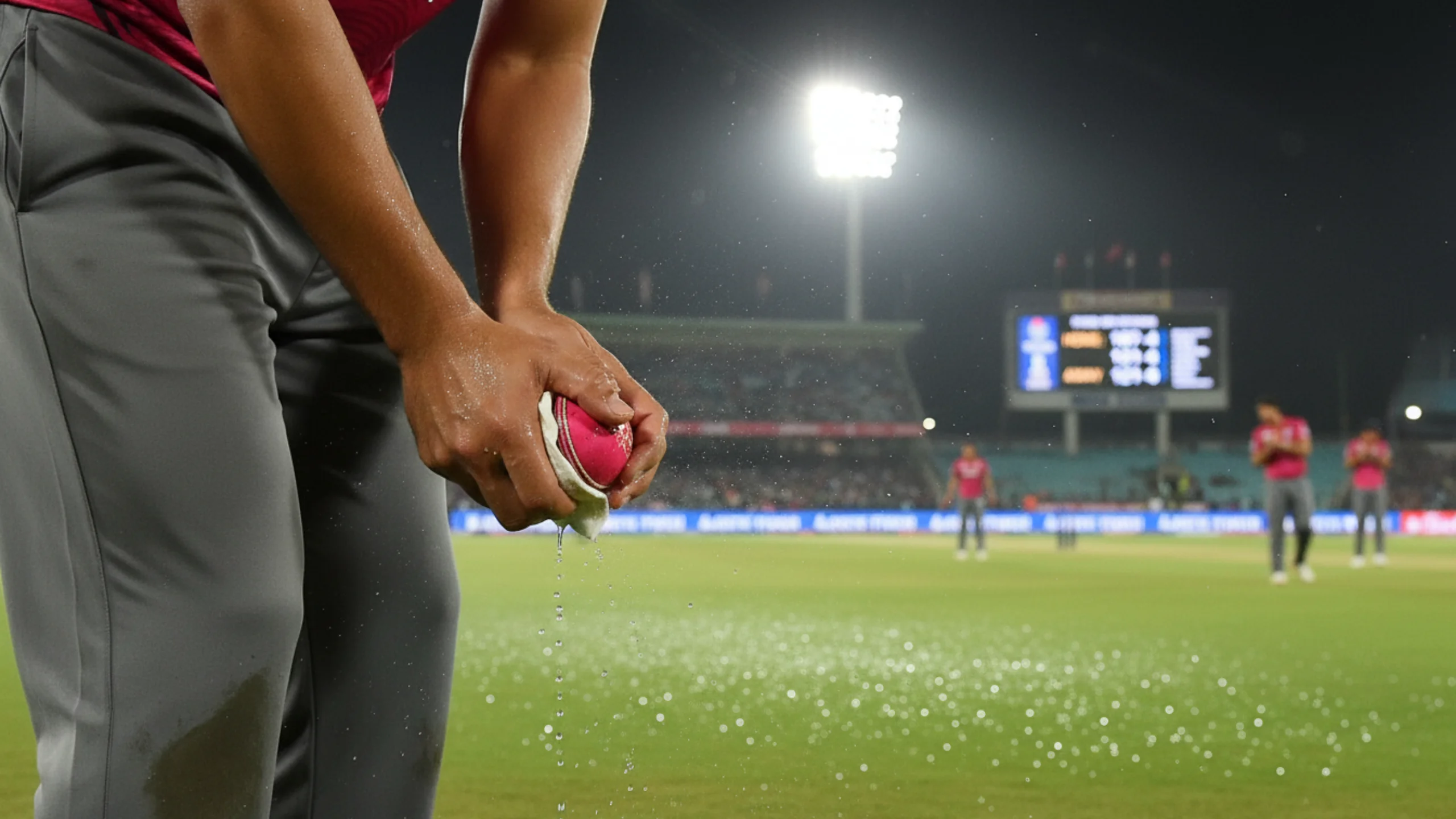
Fielding suffers equally from dew accumulation. Wet grass makes sliding stops treacherous. Catching becomes uncertain when balls slip through damp hands. Outfielders hesitate on chances they would take confidently in dry conditions. These fielding difficulties compound bowling challenges to create significant batting advantages.
The implications for team batting second in day-night matches are profound. The team chasing typically bats during the heaviest dew period, gaining advantages that the team batting first did not receive. This structural asymmetry affects optimal strategy and creates predictable patterns in match outcomes.
Toss decisions in day-night cricket often prioritise dew considerations. Many captains prefer batting second specifically to exploit dew advantages during the chase. When tosses produce batting-first decisions at venues known for heavy dew, the strategic disadvantage might not be fully reflected in odds that were set before the toss occurred.
Venue location determines dew severity. Grounds in humid climates or near water bodies experience more significant dew than grounds in arid regions. Grounds in valleys where cool air pools overnight face different dew patterns than elevated grounds where air circulates more freely. Learning venue-specific dew characteristics improves betting accuracy for day-night matches at those locations.
The pink ball used in day-night Test cricket behaves differently from the red ball in dew conditions. Some reports suggest the pink ball becomes even more difficult to grip when wet, amplifying bowling disadvantages. However, the pink ball’s different seam construction might respond differently to moisture than red ball equivalents. These format-specific factors deserve attention.
T20 leagues like the IPL feature extensive day-night scheduling, making dew a constant consideration throughout tournaments. Teams with batting depth suited to chasing gain structural advantages across entire competitions. Assessing team construction with dew factors in mind helps evaluate outright tournament betting and individual match odds.
Monitoring dew point forecasts rather than just temperature forecasts provides more precise information about likely moisture accumulation. The dew point represents the temperature at which condensation begins forming. When evening temperatures approach dew point, significant moisture accumulation becomes likely. This meteorological knowledge sharpens predictions about specific match conditions.
Temperature Effects on Pitch Behaviour and Ball Performance
Temperature influences cricket in subtle ways that casual observers often miss entirely. The pitch surface, the ball itself, and even player performance respond to temperature variations in patterns that create betting opportunities for the attentive.
Hot conditions bake pitch surfaces hard, creating bouncy conditions that suit certain bowling types. Fast bowlers extracting steep bounce trouble batsmen in ways that medium pace cannot replicate. The ball carries to the keeper and slips, maintaining catching opportunities that softer surfaces would diminish. Hot, dry conditions generally favour batting once initial seam movement disappears but assist fast bowling specifically.
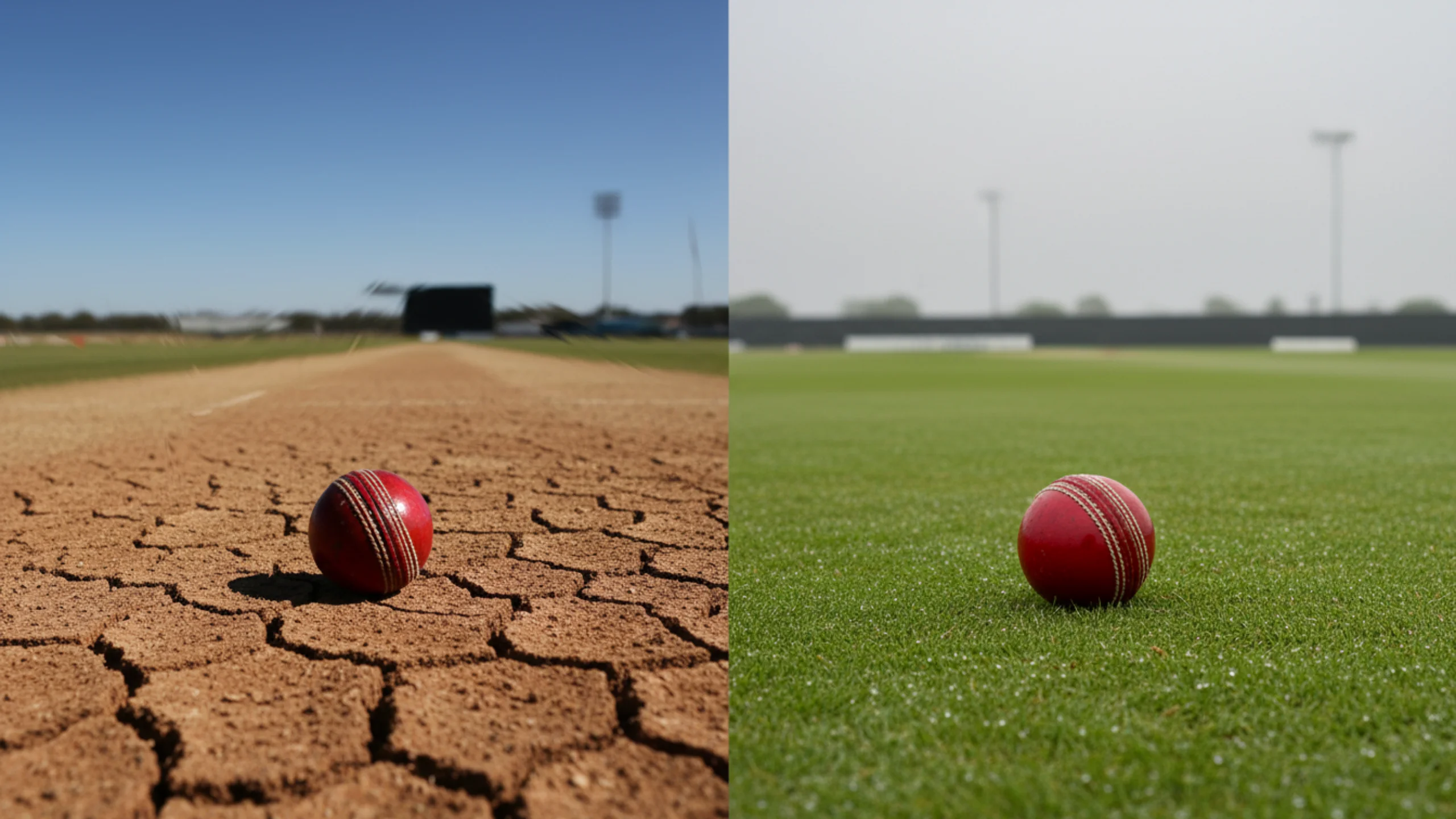
Cold conditions keep pitches softer and more helpful to seam movement. The surface retains moisture that would evaporate in heat, maintaining movement throughout innings rather than flattening as play progresses. English spring cricket in April or early May features different pitch behaviour than mid-summer matches at the same grounds simply due to temperature effects on surface hardness.
The cricket ball itself responds to temperature. Hot conditions soften the ball faster, reducing shine and making conventional swing harder to maintain. Cold conditions keep the ball harder longer, potentially extending the period when swing bowling remains effective. These ball condition effects compound pitch effects to create cumulative weather influences.
Player performance varies with temperature in ways that influence betting considerations. Extreme heat causes fatigue that affects concentration and physical performance. Bowlers tire faster, potentially becoming less accurate in later spells. Batsmen might find concentration harder to maintain through long innings. Fielding intensity often drops as temperatures rise.
Temperature forecasts for each day of Test matches help anticipate changing conditions. A match starting in cool conditions with heat forecast for days three and four suggests different tactical considerations than consistent temperature throughout. Betting positions might adjust based on which team’s strengths align with expected temperature progression.
The interaction between temperature and time of day creates daily patterns worth tracking. Morning sessions feature cooler temperatures than afternoon sessions almost everywhere. This temperature variation compounds with humidity and lighting changes to produce different conditions across a single day’s play. Session-specific betting benefits from understanding these daily cycles.
Extreme temperature events increasingly affect cricket scheduling and match conditions. Heat waves in Australia have produced conditions requiring drinks breaks every hour and concerns about player safety. These extreme conditions create unusual match dynamics that historical patterns might not capture. Flexibility in assessment becomes necessary when conditions exceed normal ranges.
Using Weather Forecasts in Pre-Match Analysis
Incorporating weather information into betting analysis requires systematic approaches rather than casual observation. The best bettors develop routines that integrate forecast monitoring with other research components to produce comprehensive pre-match assessments.
Reliable forecast sources matter more than many bettors realise. Generic weather apps provide adequate information for daily life but often lack the precision needed for cricket betting purposes. Specialised weather services offering hourly predictions, humidity readings, and dew point calculations provide more actionable information for serious analysis.
Timing your forecast checks appropriately captures the most relevant information. Forecasts improve dramatically in accuracy as events approach. A five-day forecast for match start provides general guidance but should be updated with two-day and then same-day forecasts as the match approaches. Bookmakers also update their models with improving forecasts, making timing of both information gathering and betting decisions important.
Comparing forecasts across multiple sources helps identify uncertainty. When all major services agree on conditions, confidence in weather-based adjustments increases. When services diverge significantly, the uncertainty itself becomes relevant information. Perhaps betting based on weather factors should wait until forecasts converge, or perhaps the disagreement suggests bookmakers face equal uncertainty worth exploiting.
Location-specific forecast accuracy varies considerably. Some regions have more predictable weather patterns that forecasters model accurately. Other regions feature complex geography or weather systems that produce less reliable predictions. Understanding forecast reliability for specific match locations helps calibrate how much weight to place on weather-based analysis.
Integrating weather analysis with team assessment produces the most valuable insights. Weather conditions that favour swing bowling only matter if one team possesses significantly better swing bowling resources. Dew advantages during chases only matter if batting lineups differ in their chasing capability. The intersection of weather effects and team composition creates the most actionable betting opportunities.
Creating mental checklists or written frameworks ensures consistent weather consideration across all matches analysed. Without systematic approaches, weather factors might influence some assessments but be forgotten in others. Developing habits around weather checking prevents inconsistent treatment of this important information category.
Live weather monitoring during matches sometimes reveals divergence from forecasts. Unexpected cloud development, rain arriving earlier or later than predicted, or humidity changes all create opportunities when bookmaker models rely on outdated forecast information. Staying attentive to actual conditions rather than just predicted conditions adds edge during live betting.
The cumulative impact of weather-informed betting compounds over many matches. Any single weather-based edge might prove minor. But consistently accounting for weather factors while competitors ignore them produces meaningful advantages across seasons of betting activity. The discipline of systematic weather integration rewards patient implementation.
Weather in Cricket: Summary and How to Use Forecasts in Your Betting
Weather affects cricket betting more profoundly than most bettors acknowledge. The connections between atmospheric conditions and match outcomes are not merely folklore but reflect genuine physical relationships that manifest consistently in match data. Ignoring weather means ignoring significant information that influences results.
Rain interruptions create the most dramatic weather effects through revised targets and lost playing time. Understanding how Duckworth-Lewis-Stern calculations affect different match situations helps identify value when weather threatens limited overs matches. Test cricket handles rain through increased draw probability that bookmakers sometimes misprice.
Humidity and cloud cover create more subtle but equally important effects. Swing bowling effectiveness correlates strongly with atmospheric moisture. Batting difficulties increase under overcast skies. These patterns inform session betting, innings totals, and market selection based on team bowling strengths.
Dew transforms day-night cricket by disadvantaging teams bowling in evening sessions. This structural factor affects toss decisions, team selection for chasing, and the overall strategic landscape of matches played under lights. Accounting for dew proves essential for accurate day-night match assessment.
Temperature influences pitch behaviour, ball condition, and player performance in ways that vary across match duration. Hot conditions suit certain playing styles while cool conditions suit others. Tracking temperature forecasts alongside other weather factors produces more complete environmental analysis.
Systematic weather integration into betting routines distinguishes serious bettors from casual punters. Checking forecasts from reliable sources, updating analysis as predictions improve, and monitoring actual conditions during matches creates consistent edge. Weather will not determine every match outcome, but accounting for its influence improves long-term betting results.
The knowledge here represents competitive advantage available to anyone willing to study meteorological effects on cricket. Most bettors never consider weather beyond obvious rain delays. Those who develop deeper understanding gain edge that compounds across thousands of betting decisions.
See also: cricket-matches – tips and insights for cricket bettors.
See also: Live Cricket Betting – use weather conditions during live play.
