
 Available in US
Live Cricket Betting: Your Complete Guide to In-Play Markets and Strategies

There is something uniquely thrilling about betting on cricket while the action unfolds. Pre-match wagers feel detached, placed hours or days before the first ball and then forgotten until the result arrives. Live betting is different. You watch the match, assess the situation in real time, and make decisions based on what you actually see happening rather than what you expected might happen.
Cricket suits in-play betting better than almost any other sport. The natural rhythm creates thinking space that football or tennis cannot offer. Between deliveries, you have seconds to consider your options. Between overs, you have minutes. Unlike the frantic pace of basketball or the continuous flow of football, cricket gives analytical bettors time to process information and make considered decisions.
This guide explores everything you need to know about live cricket betting. We will examine the specific markets available during matches, discuss how to read momentum shifts before they fully manifest in odds, and address the discipline required to bet successfully while emotions run high. Whether you prefer Test cricket’s five-day chess matches or T20’s explosive three-hour sprints, in-play betting transforms passive watching into active engagement.
The opportunities are real but so are the risks. Live betting rewards preparation and punishes impulsiveness. Understanding the landscape before jumping in determines whether this becomes a profitable addition to your cricket betting or an expensive lesson in why preparation matters.
Why Cricket Excels for Live Betting
Cricket’s structure creates natural advantages for in-play wagering that other sports simply cannot replicate. The stop-start nature of play provides constant opportunities to assess, reconsider, and act without the pressure of continuous action demanding immediate decisions.
Every delivery represents a discrete event with defined outcomes. The ball either produces runs, takes a wicket, or results in a dot ball. This granularity allows bookmakers to offer markets at remarkable detail levels. You can bet on what happens in the next over, the next ball, or even the method of the next wicket. No other major sport offers comparable granularity for live betting markets.
The information density in cricket is extraordinary. Run rates, required rates, partnership durations, bowling figures, boundary counts, and dozens of other metrics update continuously throughout play. Bettors who understand how to interpret this information hold genuine advantages over those merely watching and hoping. The data tells stories that commentary often misses.
Match situations evolve visibly and predictably in cricket. When a team loses three quick wickets, everyone sees the shift happening. When a partnership consolidates, the momentum change is apparent to anyone paying attention. Unlike sports where decisive moments occur suddenly and without warning, cricket telegraphs its turning points through observable patterns.
Test cricket offers unique in-play opportunities because matches last up to five days. Conditions change dramatically across sessions and days. A pitch that assists fast bowlers on day one might crumble into a spinner’s paradise by day four. Weather interruptions affect match dynamics. The draw remains a possible outcome, adding complexity that shorter formats lack. Five days provides countless opportunities to find value as situations develop.
Limited overs cricket compresses drama into shorter timeframes but creates different opportunities. T20 matches last approximately three hours, packing intense action into compact packages. ODIs offer middle ground with roughly eight hours of play. Both formats feature momentum swings that create live betting opportunities for alert observers.
The betting markets themselves tend to be more efficient pre-match because bookmakers have time to analyse and price carefully. Once matches begin, information flows faster than odds can adjust. This creates windows where alert bettors who correctly read developing situations can bet before bookmakers catch up.
Understanding Ball-by-Ball Markets
The most granular live betting markets focus on individual deliveries. These markets ask simple questions: what happens on the next ball? The answers might include runs scored, wicket falling, wide or no ball delivered, or specific outcomes like boundaries or dot balls.
Next ball runs markets let you bet on exactly how many runs the batting team scores from the upcoming delivery. Options typically range from zero through four or more, with six sometimes separated as its own outcome. Dot balls obviously occur most frequently, but boundaries happen often enough to create interesting price dynamics.
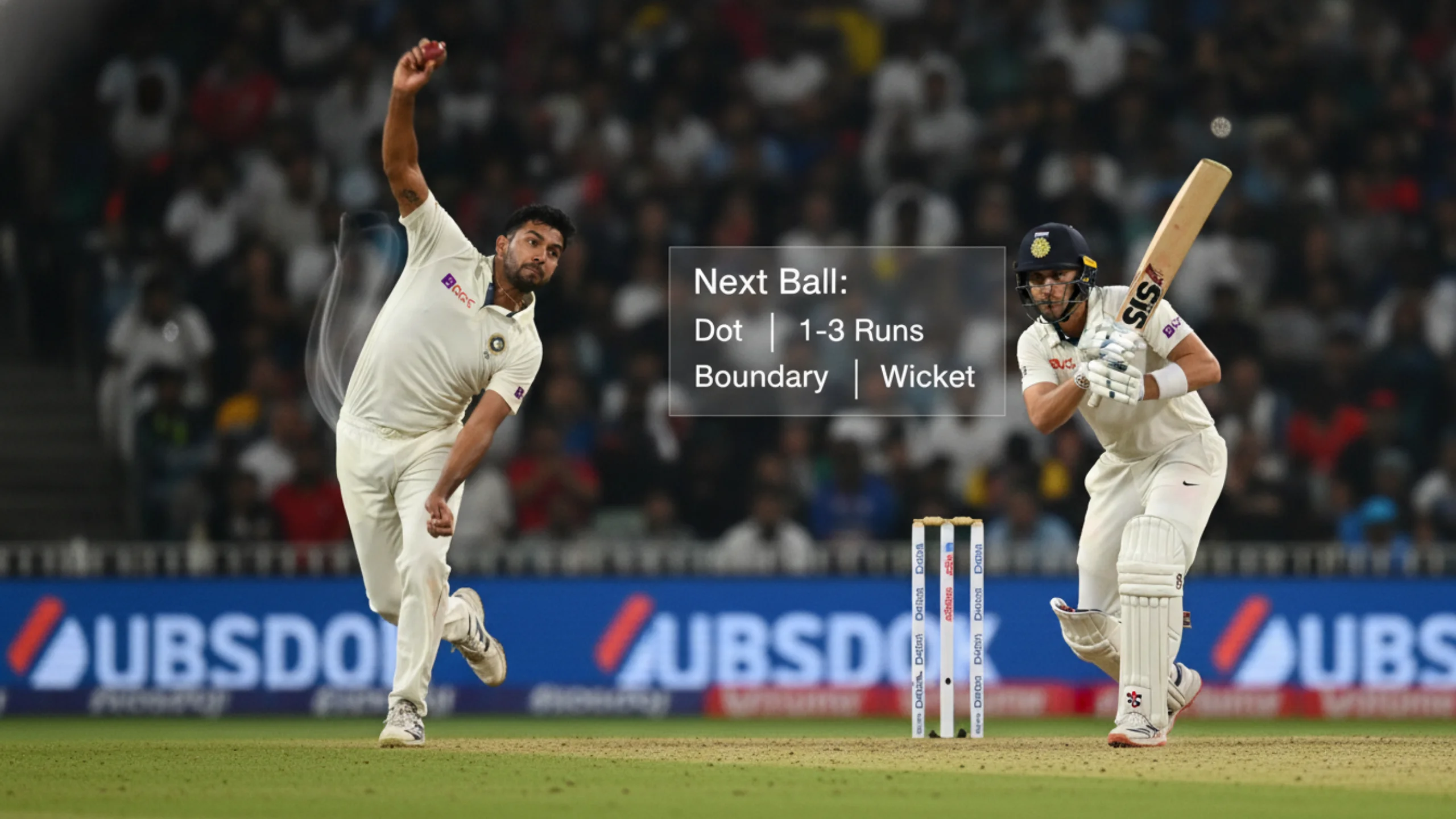
The appeal of ball-by-ball betting lies in instant resolution. You bet, the bowler runs in, the ball is delivered, and within seconds you know the outcome. This rapid feedback loop can be addictive in ways that require self-awareness. The speed also means decisions must come quickly, leaving little time for extensive analysis.
Wicket markets at the ball or over level ask whether a dismissal occurs within defined parameters. Will a wicket fall this over? Will the current batsman survive the next ten balls? These markets reward reading the match situation, understanding bowler-batsman matchups, and recognising when conditions favour breakthroughs.
Successful ball-by-ball betting requires understanding base rates. What percentage of deliveries produce boundaries? How often do wickets fall per over in different formats and conditions? Without baseline knowledge, you cannot evaluate whether offered odds represent value or traps.
Consider boundary frequency in T20 cricket. Roughly fifteen percent of deliveries go for four or six across average matches. This percentage increases during powerplays and death overs while decreasing during middle overs consolidation. Understanding these patterns helps identify when boundary odds offer value and when they merely reflect probability accurately.
The margins on ball-by-ball markets tend to run higher than match outcome markets. Bookmakers face genuine uncertainty about immediate outcomes and compensate by building larger edges into their pricing. This means value is harder to find and volumes must increase to generate meaningful returns.
Professional live bettors often focus on less granular markets where pricing inefficiencies are more significant and margins more reasonable. Ball-by-ball betting offers entertainment value but rarely provides the consistent edge required for sustainable profitability.
Session Markets and Innings Totals
Session betting in Test cricket divides each day into morning, afternoon, and evening segments. Markets ask questions about each session: how many runs will be scored, how many wickets will fall, will a specific batsman survive until tea? These intermediate timeframes balance granularity against reasonable margin structures.
Session runs markets set lines for total runs scored during specific periods. A morning session line might sit at 85.5 runs, with options to bet over or under. Factors influencing session scoring include pitch conditions, batting team intent, bowling attack quality, and even time of day effects on visibility and ball movement.

Morning sessions in Test cricket often favour bowlers, particularly in England where atmospheric conditions help swing bowling during early hours. Pitches have had overnight to gather moisture, and batsmen face fresh bowlers working through rhythm. Session totals during morning periods tend to run lower than afternoon equivalents.
Afternoon sessions typically see scoring accelerate as conditions ease and batsmen settle. The ball softens, swing diminishes, and pitches offer less assistance. Bettors who recognise these patterns can find value in session overs and unders when bookmaker lines fail to account adequately for time-of-day effects.
Evening sessions in day-night Tests introduce additional complexity through floodlights, pink balls, and dew accumulation. The pink ball swings more under lights than during daylight hours, creating bowling advantages that traditional red ball cricket lacks during equivalent periods. These format-specific factors require attention when assessing session markets.
Innings total markets offer broader bets on complete batting innings. Pre-innings markets set lines before batting begins, while live markets adjust as innings progress. The live adjustments create opportunities when bookmaker models disagree with your assessment of how innings will develop from current positions.
Consider a team batting at 150 for 3 after forty overs in an ODI. Bookmaker models project final totals based on historical scoring patterns from similar positions. But if you recognise that the batting team has unusual depth, or that conditions are deteriorating faster than typical, or that the bowling team is managing resources poorly, your projection might diverge meaningfully from bookmaker expectations.
Partnership betting asks whether current batting pairs will reach specific landmarks before being separated. Will this partnership reach fifty runs? Will both batsmen survive the next ten overs? These markets reward understanding of specific player tendencies, risk tolerance levels, and match situations that encourage aggressive or conservative approaches.
T20 and ODI Specific Live Markets
Limited overs cricket structures create markets that do not exist in Test format. Powerplays, mandatory bowling limitations, and defined innings lengths generate specific betting opportunities that require format-specific knowledge.
Powerplay markets in both T20 and ODI cricket focus on the opening overs where fielding restrictions create run-scoring opportunities. T20 powerplays last six overs with only two fielders permitted outside the inner circle. ODI powerplays span ten overs. Markets ask about total runs, wickets, and boundaries during these aggressive opening phases.
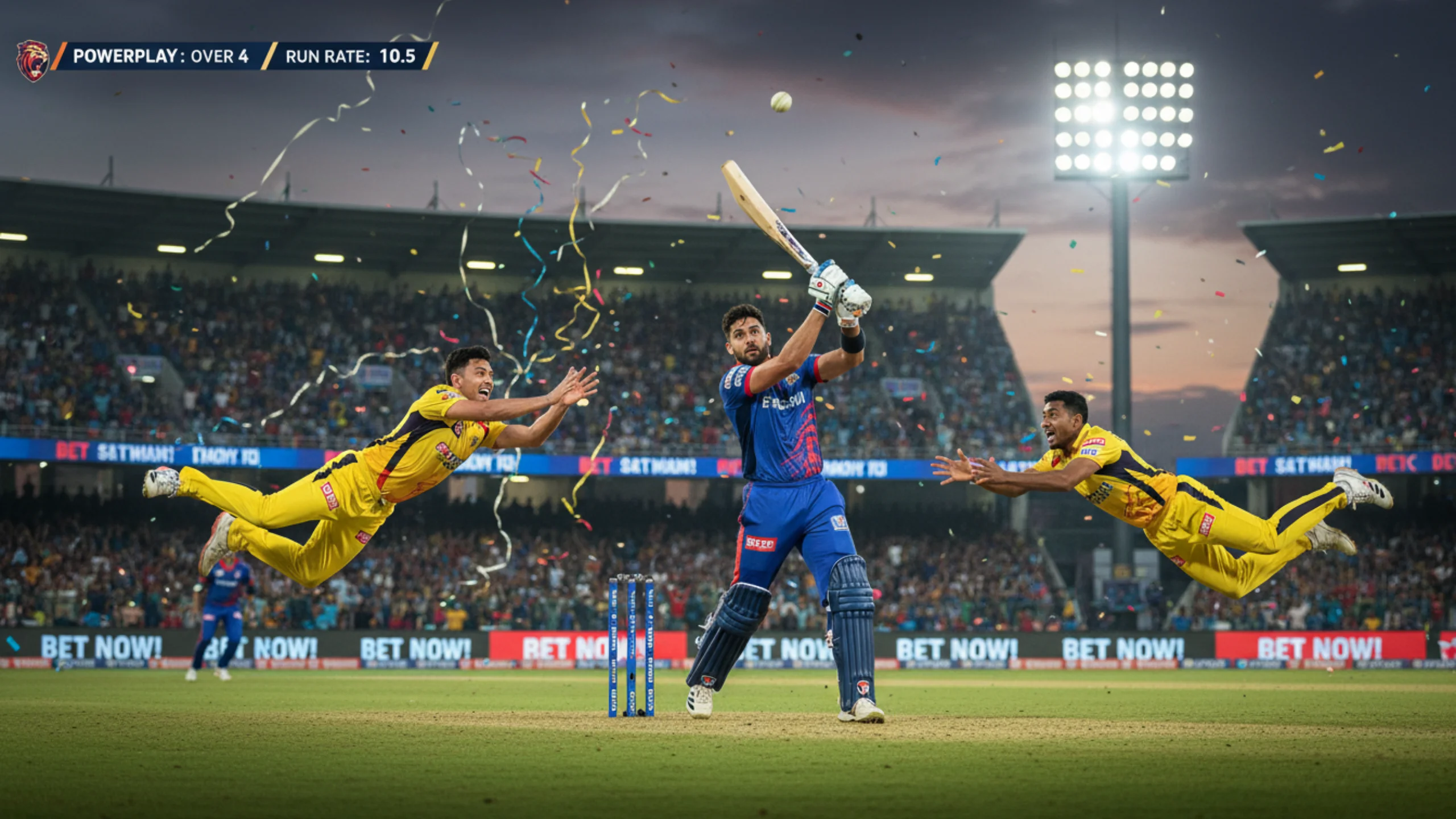
Powerplay scoring tends toward extremes. When batting goes well, teams exploit fielding restrictions to score rapidly. When early wickets fall, the same restrictions that help batsmen become irrelevant as teams consolidate desperately. This variance creates volatile markets where implied probabilities shift rapidly based on early events.
Death overs markets focus on the final overs of limited overs innings, typically the last four in T20 and last ten in ODIs. Batsmen swing hard, bowlers search for yorkers and slower balls, and run rates spike dramatically compared to middle overs. Markets cover total runs, boundaries, and wickets during these explosive finishing phases.
The predictability of death overs depends heavily on specific matchups and match situations. A batting team needing forty runs from the last four overs with wickets in hand approaches these overs differently than a team cruising to easy victory or desperately salvaging respectability. Reading these situations correctly provides edge in death overs markets.
Middle overs in ODIs present unique betting opportunities because scoring typically slows while both teams reposition for the death overs push. Batsmen consolidate, rotate strike, and preserve wickets for the acceleration to come. Markets offering good prices on lower scoring during these periods sometimes provide value that gets lost in focus on more exciting phases.
Run rate markets ask whether teams will maintain, exceed, or fall short of specific scoring rates. Required run rate markets in chases track the runs per over needed to reach targets. These markets provide objective measures of match progress that strip away narrative distractions.
The required run rate becomes increasingly important as chases progress. A team needing six runs per over with twenty overs remaining faces manageable challenges. The same team needing twelve runs per over with five overs left faces near-impossible odds. Watching required rates evolve helps predict when chasing teams will abandon caution and take risks that frequently produce wickets.
Reading Momentum Before the Markets Move
The best live betting opportunities exist in the brief windows between momentum shifts becoming apparent and bookmaker odds adjusting to reflect new realities. Developing the ability to read momentum earlier than markets respond creates genuine edge.
Momentum in cricket manifests through visible patterns that attentive observers recognise before they appear in scoreboards. A batsman playing and missing repeatedly signals trouble coming even while runs continue flowing at the other end. A bowler hitting good lengths consistently after starting loosely suggests breakthrough potential despite early punishment.
Body language reveals information that statistics cannot capture. Batsmen walking between overs with slumped shoulders and anxious gestures often struggle mentally regardless of their scoreboard position. Fielding teams showing frustration through argument and disorganisation frequently bowl poorly in subsequent overs. These human elements provide betting edge for those willing to watch closely.
Partnership dynamics tell stories about likely outcomes. Two set batsmen rotating strike confidently project different futures than partnerships where one player dominates while the other struggles. Understanding which partnerships look sustainable versus which rely on fortune helps assess over and under markets for runs and wickets.
Pitch behaviour evolves throughout matches, particularly in longer formats. Cracks widen and produce variable bounce. Dust accumulates and assists spin. Surfaces that offered pace and carry during morning sessions sometimes become slow and low by evening. Recognising these transitions earlier than bookmaker models adjust creates opportunities.
Weather changes affect live betting in ways that pre-match analysis cannot fully anticipate. Cloud cover rolling in favours swing bowlers. Humidity increasing helps movement through the air. Bright sunshine typically assists batting. Monitoring weather alongside match action helps predict condition changes before they fully manifest.
The challenge lies in distinguishing genuine momentum shifts from temporary fluctuations. Not every poor over from a bowler signals collapse. Not every boundary starts an acceleration. Cricket features constant minor variations that mean nothing for broader outcomes. Developing judgment about which patterns matter requires experience and honest evaluation of past assessments.
Successful momentum reading also requires understanding how quickly bookmakers adjust. Some platforms update odds continuously with sophisticated algorithms. Others adjust more slowly, relying on manual observation and periodic repricing. Knowing your chosen platform’s responsiveness helps identify where timing advantages exist.
Cash-Out Strategies and When to Use Them
Cash-out features allow you to close positions before outcomes become certain. Winning bets can be settled early for guaranteed profit. Losing positions can be exited to limit damage. The flexibility appeals to bettors who want control over their exposure as matches develop.
The mathematics of cash-out offers reveals bookmaker edge. Cash-out prices typically fall below fair value calculated from current odds. Bookmakers profit from the service by offering worse terms than holding to conclusion would provide on average. Understanding this helps evaluate when cash-out makes sense despite the embedded costs.
Early cash-out on winning positions sacrifices expected value for certainty. If you bet on a team at 3.00 and they now price at 1.50, holding provides higher expected return than cashing out. But certainty has value that mathematical expectation ignores. If the guaranteed profit matters more than the potential additional gain, cashing out represents rational decision-making despite theoretical suboptimality.
Loss limitation through cash-out prevents small mistakes from becoming disasters. A bet placed on faulty analysis can be exited when the error becomes apparent. Rather than riding hopeless positions to total loss, cash-out allows salvaging partial stakes. This flexibility helps with bankroll preservation even when individual decisions were wrong.
The psychological danger of cash-out lies in retroactive evaluation. Cashing out for profit followed by the bet eventually losing feels brilliant. Cashing out followed by the bet eventually winning feels foolish. Neither evaluation is correct because both ignore the information available when the decision was made. Judging cash-out decisions by outcomes rather than process encourages poor future decision-making.
Situational factors should drive cash-out decisions rather than arbitrary rules. Match conditions, remaining uncertainty, available price, and personal risk tolerance all matter. Some bettors develop systematic approaches, cashing out at specific profit levels or when certain conditions are met. Others evaluate each situation individually based on current assessment.
The worst cash-out behaviour involves constantly second-guessing positions. Cashing out, then watching odds move favourably, then regretting the decision, then holding future positions too long to avoid the same regret—this pattern destroys both profits and enjoyment. Developing consistent decision-making processes and accepting outcomes from those processes helps maintain psychological stability.
Live betting without cash-out access forces commitment to positions until resolution. Some bettors prefer this constraint because it prevents second-guessing and over-trading. Others find the flexibility valuable enough to accept the embedded costs. Neither approach is objectively superior.
Maintaining Discipline During Live Betting
The excitement of live betting creates psychological challenges that pre-match wagering largely avoids. Emotions run higher when money is at stake during unfolding action. The temptation to chase losses or increase stakes after wins intensifies when the next betting opportunity arrives within minutes.
Establishing betting limits before matches begin provides structure that resists emotional decision-making. Decide maximum total stakes for the session. Decide maximum individual bet sizes. Decide loss limits that trigger stopping regardless of perceived opportunities. These predetermined boundaries protect against decisions made in heightened emotional states.

The availability of constant betting opportunities in live cricket creates overtrading risk. Every over offers potential bets. Every session presents markets. The volume of options can seduce bettors into activity far exceeding rational levels. Quality of opportunities should drive betting frequency, not mere availability.
Successful live bettors develop selective habits. They watch extensively and bet sparingly. They wait for situations where genuine edge exists rather than betting for action or entertainment. They accept that most of the match offers no value worth pursuing. This patience separates profitable live bettors from those who simply enjoy the experience at the cost of their bankrolls.
Record keeping becomes particularly important for live betting because the volume of decisions makes accurate memory impossible. Track every bet, every stake, every outcome. Review patterns over time to identify strengths and weaknesses. Perhaps you perform well in certain markets or conditions but poorly in others. Only systematic tracking reveals these patterns.
The social aspect of watching cricket while betting adds complexity. Friends offering opinions, commentary suggesting narratives, social media providing reactions—these inputs can influence betting decisions in ways that have nothing to do with value identification. Developing the ability to filter noise while maintaining focus on analytical assessment takes conscious effort.
Fatigue affects judgment in ways that live bettors must acknowledge. A five-day Test match offers hundreds of betting opportunities. Maintaining analytical sharpness throughout is impossible. Recognising when fatigue has degraded decision-making quality and stepping away prevents mistakes that alert, rested assessment would avoid.
The relationship between watching enjoyment and betting success often proves inversely correlated. Bettors who wager primarily for entertainment tend to lose because entertainment value comes from action rather than selectivity. Bettors who approach live betting as serious analytical exercise sometimes find their viewing enjoyment diminished by the constant focus required. Finding sustainable balance matters for long-term engagement.
Common Mistakes in Live Cricket Betting
Learning from common errors helps avoid repeating them. Live betting creates specific pitfalls that trap even experienced bettors who should know better.
Overreacting to recent events represents perhaps the most common live betting mistake. A team loses two quick wickets and suddenly looks doomed. Three boundaries in an over and suddenly they look dominant. These recency effects distort probability assessment and lead to betting at precisely the wrong moments—when odds have already adjusted to reflect visible changes.
Ignoring match situation context leads to poor decisions. The same statistical outcome means different things in different situations. A partnership of thirty runs matters enormously when the team was 50 for 5. It matters far less when the team was 200 for 2. Context shapes interpretation, and betting without contextual understanding produces random results.
Chasing steam involves betting on outcomes because odds are moving rather than because of independent analysis. If a price shortens from 3.00 to 2.50, something is happening—perhaps smart money entered the market. But following price movements without understanding why they occur means betting on others’ opinions rather than your own assessment.
Confirmation bias affects live betting particularly severely. After placing a bet, bettors tend to notice information supporting their position while dismissing contradictory evidence. The batsman looks confident because you bet on runs. The bowler looks dangerous because you bet on wickets. This selective perception prevents accurate reassessment as matches develop.
Failing to adjust for conditions caught many bettors during rain-affected matches. Duckworth-Lewis-Stern calculations produce revised targets that sometimes favour one team significantly. Understanding how D/L/S works and anticipating its implications helps navigate weather-affected situations rather than being surprised by revised scenarios.
The sunk cost fallacy appears when bettors hold losing positions because they have already committed stakes. The money already wagered is gone regardless of future decisions. Only expected value from current positions matters. Yet emotional attachment to past bets often prevents rational evaluation of whether positions still make sense.
Live Cricket Betting: Summary and How to Get Started with In-Play Markets
Live cricket betting offers opportunities that pre-match wagering cannot replicate. The ability to assess developing situations, watch conditions evolve, and bet based on actual rather than anticipated events creates genuine advantages for prepared bettors. Cricket’s natural rhythm provides thinking space that makes in-play analysis feasible in ways faster sports do not allow.
The markets available during matches range from broad match outcomes to granular ball-by-ball propositions. Understanding which markets offer reasonable value and which carry margins too heavy for sustainable profitability helps focus activity where edge actually exists. Session markets and innings totals often provide better risk-adjusted opportunities than the most granular options.
Reading momentum before markets fully adjust represents the core skill separating successful live bettors from those who simply react to obvious developments. This requires attentive watching, pattern recognition, and willingness to act on assessment before confirmation arrives. The windows between momentum shifts becoming apparent and odds adjusting create the primary value opportunities.
Discipline remains essential because live betting intensifies every psychological challenge that betting presents. The constant availability of opportunities, the emotional engagement with unfolding action, and the fatigue of extended matches all create pitfalls for the unprepared. Establishing rules before matches begin and maintaining those boundaries throughout provides necessary structure.
Approach live cricket betting as a skill to develop rather than entertainment to consume. The learning curve rewards those who invest in understanding markets, developing situational awareness, and maintaining psychological discipline. Done properly, in-play betting enhances both profitability and engagement with cricket. Done carelessly, it accelerates losses while adding stress to what should be an enjoyable viewing experience.
See also: cricket-matches – your home for cricket betting.
See also: How Weather Affects Cricket Betting – a key factor for live bets.
